What Does Assessment for Learning Look Like in Higher Education?
September 5, 2026
5 min read

Most universities have adopted the vocabulary of assessment for learning without changing the instruments they assess with. Module handbooks describe feedback as developmental and formative work as central to the learning process, while the actual measurement still happens through a terminal exam and a coursework submission returned after the module has ended. The principle sits in the policy document. The practice sits in the gradebook.
This is not a failure of intent. A 2025 review of formative assessment barriers in higher education identifies the recurring obstacles clearly: instructor time constraints, large class sizes that limit individualized feedback, resource limitations, and the pedagogical knowledge required to run formative practice well. Assessment for learning is expensive in exactly the resource universities have least of, which is academic attention per student.
The Three Conditions That Make It Real
Assessment for learning is not defined by timing or by whether a task carries marks. It is defined by whether the assessment generates information that changes what happens next, for both the student and the instructor. Three conditions have to hold.
The first is that the task must expose reasoning rather than output. A correct answer is compatible with sound understanding, memorized procedure, or a lucky guess, and a score alone cannot separate them. The second is that the student must act on what the task reveals, not merely receive a comment about it. The third is that the instructor must be able to see the pattern across a cohort in time to teach differently.
Most institutional practice satisfies none of these. The Office for Students has reported that satisfaction with assessment and feedback sits below every other area students are surveyed on, and the reason is structural rather than attitudinal. Feedback arrives after the decision point it was supposed to inform.
Frequency Is Not the Mechanism
A common institutional response is to add more formative touchpoints, usually through the virtual learning environment. The evidence does not support this as a solution on its own. A learning analytics study of 336 undergraduates in a large asynchronous course found that increasing the frequency of online formative assessments did not consistently improve performance on midterms and finals, and that participation varied considerably depending on whether the task was optional or mandatory.
The finding is worth sitting with. Volume of low-effort checking does not accumulate into understanding, because the checking instrument itself is not measuring understanding. Ten recall quizzes produce ten recall signals.
The first international systematic review of formative assessment and feedback in higher education argued that institutions should use causal evidence to challenge approaches that lack strong foundations, and quiz frequency is one of those approaches. The variable that matters is what the task demands of the student cognitively, not how often it appears in the course calendar.
When the Assessment Is Itself the Learning
Teaching-based assessment resolves the tension differently. If a student is required to explain a concept to someone who does not already understand it, and that listener holds specific incorrect beliefs that must be identified and corrected, the explanation cannot be produced from recall. The student has to hold the concept, diagnose the error, and reconstruct the reasoning in a form another mind can use.
This is where Axiom Flow sits. Before a session, Atlas analyzes the uploaded course material, generates a configurable number of misconceptions, and writes one exam question mapped to each. Sam, the AI student, begins holding those misconceptions and has no independent way to check what is true. He accepts what he is taught, asks questions when an explanation is unclear, and does not judge or score anything during the teaching phase.
The teaching phase is unscored, no-score practice. What follows is not. Sam answers the exam questions using only what the student taught him, and Atlas evaluates those answers to produce a score, a list of resolved misconceptions, and the gaps that remain. Unlike a standard formative assessment platform that monitors recall and reports participation, Axiom Flow turns a formative activity into a summative result, which makes it a conceptual mastery assessment rather than a checking tool.
The Institutional Case
This design satisfies the three conditions directly. Sam's exam answers are a misconception-based evaluation of the student's own explanation, so the signal is diagnostic rather than binary. The student acts within the assessment itself, because correcting Sam is the only mechanism by which his understanding changes. And instructors receive the gap report at cohort level, alongside session duration, active engagement time, and the full transcript of how each student taught.
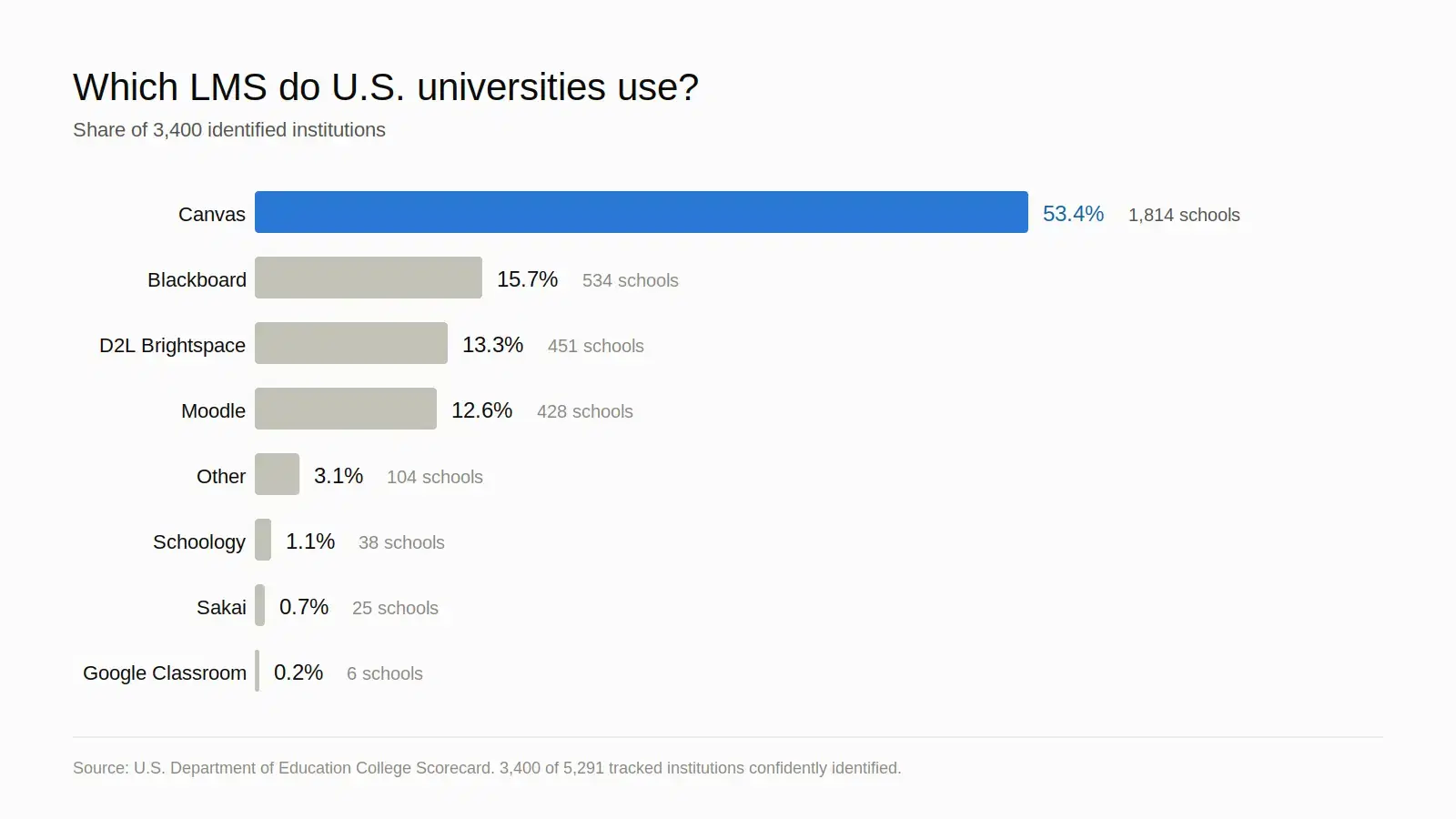
Delivery matters for adoption. Axiom Flow currently integrates with Moodle, tested with over 100 students in live academic courses, with the final score written to the gradebook automatically. Institutions without a system like Moodle can run assignments through the Axiom Flow admin portal instead. This distinction, between what a system delivers and what it actually measures, is one worth examining when evaluating any online assessment platform.
Students also cannot paste text while teaching Sam. They type or speak their own explanation, which is the constraint that keeps the articulation genuine and separates this from a submission exercise.
Assessment for learning has always required that the act of being assessed builds understanding rather than merely sampling it, which is also what distinguishes it from assessment as learning and from the summative work it is often confused with. Departments that want the principle rather than the vocabulary need instruments where explanation, not selection, is the thing being measured.
Enjoyed reading this? Share this article with your network.