Inside an Axiom Flow Session: How Teaching Sam Reveals What You Actually Know
July 26, 2026
5 min read

A student can select the right answer on an exam without understanding why it is right. Axiom Flow was built to close that gap, and the clearest way to explain how is to walk through an actual session, start to finish.
Uploading the material and setting thought count
A session starts with a document. In the walkthrough, a set of lecture notes on the solar system is uploaded, then a thought count is selected before the session begins. That thought count determines how many misconceptions the session will generate: 5, 10, 15, or 20, configurable depending on how deep the review needs to go.
Once the material is uploaded and the session starts, two AI agents take over: Atlas and Sam.
Atlas builds the exam before the student learns anything
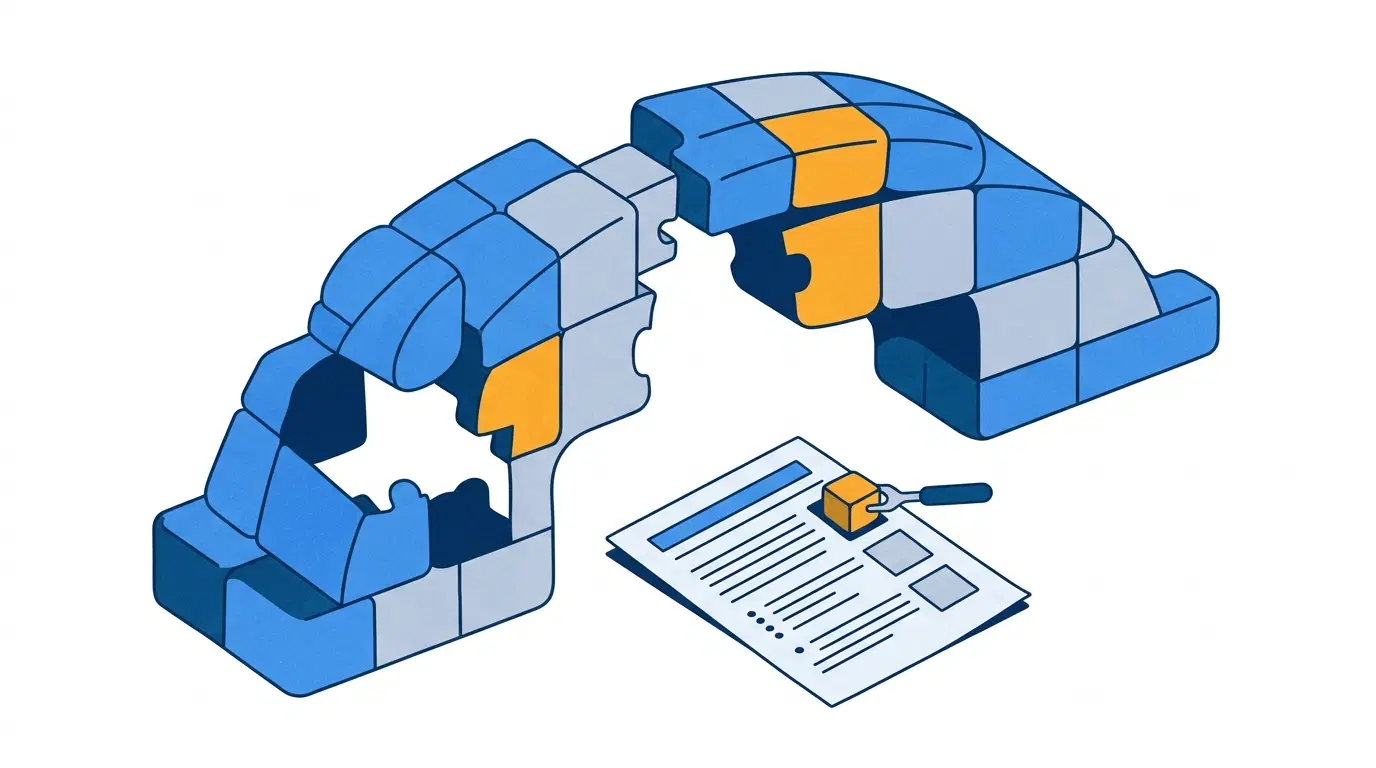
Atlas is the assessment designer and examiner. It reads the uploaded material and generates a set of misconceptions, each one a plausible but incorrect belief a learner might hold about the content. For each misconception, Atlas writes one mapped exam question, so every question in the final exam corresponds directly to a specific gap in understanding rather than a general topic area.
This is a meaningful departure from how most formative assessment platform tools work. Unlike a standard formative assessment platform that checks whether a student can recognize the correct answer among several options, Axiom Flow builds the exam around specific, targeted errors and only reveals whether those errors were actually corrected.
Atlas then hands its misconceptions to Sam, and the second half of the session begins.
Sam does not know what is true
Sam is an AI student, and the design constraint here matters: Sam starts with the misconceptions Atlas generated and has no independent way of knowing which of its own thoughts are correct. Sam updates its thoughts only in response to what it is taught. If a learner explains something incorrectly, Sam will incorporate the error. If the explanation is incomplete, Sam will ask a follow-up question rather than accept a partial correction.
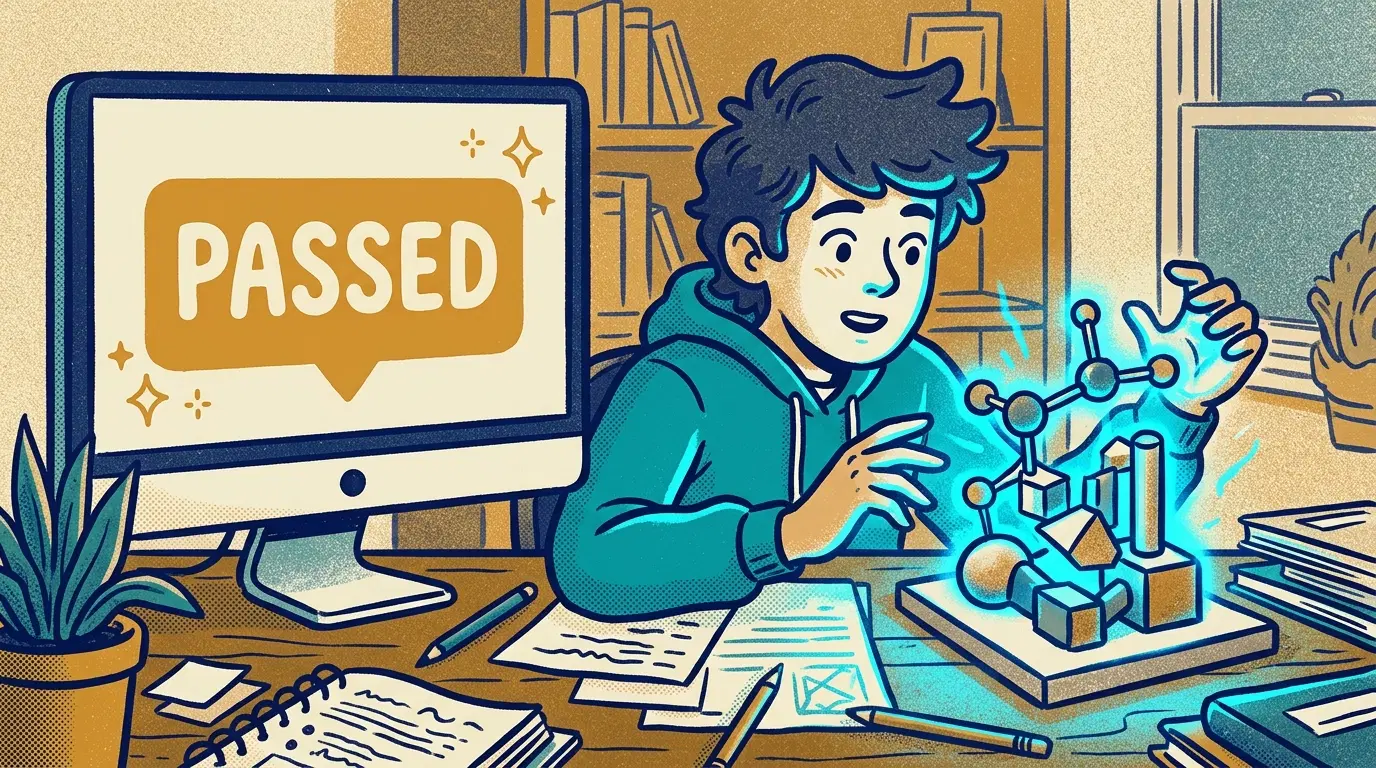
This is the classroom step, and it is the part of the session where the actual measurement happens. In the walkthrough, one of Sam's thoughts states that the sun is only a small part of the solar system. It is corrected by explaining that the sun accounts for the overwhelming majority of the solar system's total mass. Sam does not simply mark the correction as accepted; it evaluates whether the explanation actually resolves the misconception or only partially addresses it.
The mechanism draws on a well documented pattern in learning science. Research on teachable agents has found that students put in more effort to learn when they believe they are teaching an agent than when they are learning for themselves, with the effect most pronounced among lower performing students. Axiom Flow is not simulating this effect for engagement purposes. It is using it as the assessment mechanism itself: the act of teaching Sam is the test, not preparation for one.
Learn how assessment for learning differs from assessment of learning
The exam only reflects what was actually taught
After the misconceptions are addressed, Sam is sent to a mock exam built from the questions Atlas generated at the start of the session. Sam answers using only the understanding it built during the teaching phase. Nothing else informs its answers.
In the walkthrough, only one of Sam's five thoughts was fully corrected before the exam, and Sam answered exactly one question correctly. The other four misconceptions were left unresolved or only partially addressed, and Sam's exam performance reflected that directly. Atlas then reviews the results and identifies which misconceptions remain, producing a final mastery score.
This is the practical difference between checking an answer and evaluating understanding. Research on multiple choice exams in physics has found that a correct answer is, more often than not, a false indicator of deep conceptual understanding, since a student can select the right option without being able to explain why it is right, or for the wrong reasons entirely. Axiom Flow's exam step removes that ambiguity. Sam cannot guess correctly; it can only answer based on what it was actually taught, which means a high score is only possible when the underlying misconceptions were genuinely resolved.
What the session actually measures
None of this makes Axiom Flow a tutor, a content delivery tool, or a study app. Atlas and Sam exist to produce a mastery score derived from teach-back assessment, not to walk a learner through material. The document upload, misconception generation, teaching phase, and exam are all steps in a single misconception-based evaluation, currently deployed as a Moodle LTI plugin and tested with more than 100 students in live courses.
The session structure also explains why the scoring feels more demanding than a typical quiz. Sam's exam score is a direct function of teaching quality: correct one misconception fully and Sam answers that question correctly, leave it half-addressed and Sam's answer reflects the gap. That link between explanation and outcome is the entire basis for the older claim, now backed by session data, that a person does not fully understand something until they can teach it.
For students, this makes Axiom Flow a revision tool built around explaining material rather than re-reading it. For instructors, the same session structure works as an assignment: a document goes in, and a mastery score tied to actual conceptual correction comes out.
Enjoyed reading this? Share this article with your network.